Sunday, June 28, 2015

What is an Area Welfare Specialist?

Quite often we are asked: "What is an Area Welfare Specialist and what do you do?"  According to the description on the Internet - "Area Welfare Specialists support senior humanitarian missionaries as they develop and implement humanitarian projects."

On a typical day we go to the office (an 8 minute walk from our flat) between 7:30 and 8:00 am.  If it is raining there is a shuttle that will pick us up at the apartment building at 7:45.  Gary nearly always walks - the arthritis in Susan's feet determine if she will walk or ride.  Upon arrival at the office we turn on our computers to check emails and the humanitarian project database for new requests and updates. Each morning, Susan checks the United States Geological Survey website for earthquakes with a magnitude over 5.0 and tropical storms in the Pacific Area.  She then sends an email to the Area Welfare Manager and office staff. Everyone is made aware of any possible emergencies.  


Gary at his computer
Our Administrative Assistant, Luisa
On Mondays at 8:30 am there is a devotional for all church employees and missionaries.  It usually lasts about 15 to 20 minutes.  At 9:00 am we then meet with the Area Welfare Manager and our Administrative Assistant where we discuss plans for the week.


Gary, Luisa, and Hans
Tuesday through Friday the office work is similar if we are in New Zealand. We read and respond to emails, monitor earthquakes and storms, answer phone calls and help do our best to support our humanitarian couples and staff throughout the area.  

Once a month we attend the Area Welfare Counsel Meeting (AWCM) with a member of the Pacific Area Presidency, the Director for Temporal Affairs, ourselves, our Administrative Assistant, the Area Welfare Manager, the Self-Reliance Services Manager, and the Area Controller.  At this meeting we present, review and discuss humanitarian and welfare proposals for the Pacific Area.  It was just last week that we held our monthly AWCM.  Prior to the meeting, our humanitarian couples submit their requests to fund various humanitarian projects in their countries.  Gary looks over these requests, tweaks them if necessary and puts them into a power-point format which we present for review and discussion in the AWCM.  This month we had 17 projects submitted and also approved.  The project requests range from materials to help a village complete a water system, or providing school playground equipment to shipping donated school furniture to one of the poor island countries. Other examples could include equipment and supplies for humanitarian dental clinics or helping a poor subsistence agriculture village prepare their land to plant crops. Each project is reviewed on it's merits and either approved or returned for further development.  

When our couples submit their projects we suggest that they contain the following elements: 

1.  Have the support of the local priesthood.   

2.  The beneficiaries are involved in the project - its good to have "sweat equity" as part of the project.

3.  Have volunteers participate - include project recipients and volunteers from the Church and the community.  

4.  Do something so the community will grow and benefit from this project.  To the extent possible, they will be better able to respond themselves to meet future challenges.  

5.  We try to use "local solutions" to the problem.  If local solutions are used, the community will know how to maintain the project and hopefully fix future problems. 

After our meeting, we go back to our office and notify the couples that their projects have been approved (or need to be modified) and take care of other challenges and difficulties that may arise.  

Gary's main role is working with the couples, developing the larger projects, budgeting for the next year and  helping them solve problems as they arise.  

Susan's role is humanitarian blogger.  We request that the couples send us a short paragraph and pictures each month with their successes.  When all the reports are in, she puts together a newsletter.  The newsletters help the missionary couples see what the other couples are doing and hopefully spark ideas that they might consider in their own country.  It also gives the Area Presidency an overview of the work.  Here are just a few of the pictures she receives along with a short comment of what they are doing.


There you have it - what an Area Welfare Specialist does.  Since we are making this post on Sunday night we will start all over again tomorrow morning.  We enjoy the work we are engaged in, love exploring New Zealand on the weekends and are very happy with the life of a Area Welfare Specialist in New Zealand.  We are only missing one thing - our family.  

"No one has learned the meaning of living until he has surrendered his ego to the service of his fellow man." Thomas S. Monson, Service Bring Joy, New Era, October 2009

Monday, June 15, 2015

Ghost Blogger

Ranginitito? Spelling?

We received an email saying we made a new blog post - only the one problem.  We never made this post.  If we did, we didn't intend to make it.  We decided that it must have been the Ghost Blogger.  

We have visited an island near Auckland called Rangitoto, but we haven't written a post  about it.   We have been working on a post telling about the various regional parks and beaches in New Zealand.  But that is still coming - stay tuned.

There are 35 Regional Parks in the Auckland area.  In fact, according to Wikipedia, New Zealand has 14,000 kilometres (8,700 miles) of coastline making it the 10th longest in the world. The coastline on both islands borders the Tasman Sea and the Pacific Ocean. The entire country of New Zealand measures 2,813 kilometres (1,748 miles) from the northern tip of the North Island to the southern tip of the South Island.  At the widest point it is about 100 miles wide, so you are always close to an ocean.  There are many beautiful and nearby beaches to visit.

This past weekend we went with two other couples from the Area Office to Waiwera Thermal Resort (see http://winterskiwi.blogspot.co.nz/2014/09/first-weekend-in-takapuna-new-zealand.html) It was our Friday night date and we all slept very well after spending time in the thermal pools.

On Saturday we went with Elder and Sister Whidden to with Tāpapakanga Regional Park. We always have a good time and enjoy being able to jump in the car and take off on the weekend to visit new places.  Where else can you find a beautiful and deserted beach almost anywhere you go?  Although it is winter here.    


Friday marked our oldest grandson, Taylor's birthday.  He is 12 and received the Aaronic Priesthood.  We are proud of him and the fine young man he is becoming.  We hope to visit with him more this coming weekend.  


"May we adapt to the changes in our lives, may we realize what is most important, that we may express our gratitude always and thus find joy in the journey."   Thomas S. Monson, Finding Joy in the Journey, October General Conference 2008

Tuesday, June 2, 2015

On Our Way Home

Some of the places we travel to have flights only on certain days or require an indirect route to get there.  To get from Majuro, Marshall Islands to Auckland, New Zealand is one of those adventures.  In order to get back to New Zealand from the Marshall Islands we had to fly to Hawaii. We left Majuro at 8:00 pm and arrived in Honolulu at 3:00 am the same day.  You cross the international dateline in the process.  The flight from Honolulu leaves at 11:00 pm and arrives in New Zealand at 6:00 am a day later (you cross the dateline again).  We left Majuro on Friday night and arrived Friday morning in Honolulu.  Saturday was Susan birthday so she requested that we not fly out on Friday night so that we wouldn't totally miss Saturday.   So we spent an extra day (on our dime) in Hawaii and lost our Sunday arriving back to New Zealand Monday morning June 1st (Queen's Day). Queen's Day is a holiday in New Zealand and so we had the day to do laundry, shop at the store and get ready for our work week beginning Tuesday morning.  It was an interesting weekend -- two Fridays and no Sunday.

We had a day and a half in Hawaii.  It was just what the doctor ordered even though we couldn't go to Pearl Harbor due to an earlier mishap at the dock of the Arizona Memorial which closed the monument.  We had birthday dinner Friday night and lunch again Saturday at the Cheesecake Factory.  We swam in the ocean Saturday morning, relaxed and prepared to leave Honolulu late that night. We returned to the office on Tuesday morning refreshed and renewed and ready to go to work.


"When men and women lay aside the frantic schedules they are required to keep and the demands of their profession to reach out . . . they will discover a resurgence of their desire to help, and in each instance they will realize that they have returned with no diminution of ability but with a heart filled with gratitude, for they will find they have been on the Lord's errand and have been the beneficiaries of His help and blessings."  Thomas S. Monson "Teachings of the Prophet

Wednesday, May 27, 2015

Majuro, Marshall Islands

We boarded the plane on Tarawa, Kiribati, and flew to Majuro, Marshall Islands.  Both Kiribati and the Marshall Islands are very narrow long islands.  They are made up several small islands called atolls.  Here is what we learned about atolls.  An "atoll" is made of coral.  There are four atoll nations in the world.  Marshall Islands, Kiribati, Maldives, and Tuvalu.  Atolls can only be found in tropical ocean regions.  Coral reefs, which form the foundation of atolls can only grow in waters with annual temperatures between 23 (73) and 25 (77) degrees.  We also learned that neither country is very big.  The Marshall Islands is really 29 separate atolls.  It is also one of the world's youngest nations, becoming a nation in 1986. Majuro is the capital of the Marshall Islands.

Kiribati
Marshall Islands
Another view of Marhsall Islands
Elder and Sister Crooks were at the airport waiting for us and we were delighted to see them.  Elder and Sister Crooks have been in the Marshalls since the middle of February.  During that time they have been very busy making contacts and getting to know the people of the Marshall Islands and conducting a basic needs assessment.

They took us to our hotel where we dropped off our luggage and then we drove back to the mission office where we were able to get the Internet and check our emails.  After dinner we spent time with E/S Crooks, planned the next day and went to our hotel.


Our hotel room
Gardens
More gardens
Our room was right next to the ocean
Notice the clouds - it rained in less than 30 minutes 
Out of 50 countries with poor dietary habits, the Marshall Islands is ranked #1 as being the country with the most cases of diabetes.  All of our meetings were focused to gather information in support of  a diabetes prevention project.  Tuesday morning we met the Crooks at the Mission Office where we participated in a district meeting with them and the other missionaries.  Then we went to the U.S. Embassy and met with the U.S. Ambassador to the Marshall Islands.  We discussed the needs of the health sector on the islands.  For lunch we met with the Red Cross and again talked about the needs of the people on the islands and efforts to prepare for emergencies.  That concluded our meetings for the day and we went back to the Crooks apartment where they made another delicious dinner and we did some laundry.  Following dinner and some planning we drove back to our hotel which was on the other end of the island.  The mission office and their apartment are in the middle of Majuro Island.

Wednesday morning we did a little work in the mission office and then we went to the hospital where we met with medical personnel from the USA who were there conducting a vision screening and surgical clinic.  Next we met with the head of the Hospital Diabetes Clinic and discussed how we can support their efforts at diabetes prevention.  We then visited and toured the Diabetes Wellness Center which is a part of the hospital where we had a very healthy lunch.


 In the afternoon we met with the assistant Minister of Health and the acting Secretary of Health.  Again we discussed the need for diabetes prevention on the island.  We then went to the Hospital Rehabilitation Center and discussed their challenges and needs.  Diabetes often results in amputations which leads to the need for wheelchairs and other mobility devices.


Our final meeting of the day was with a nurse and doctor who are part of a group from Taiwan.  They  work the Ministry of Health and are building a medical database.   In our discussion with them, the doctor made some interesting comments.  He said three things which struck a chord with us.  He talked about the power of peers, that most power is in the people and that "the body is a temple".  


Thursday morning we visited a workshop where they are teaching the youth how to build boats.


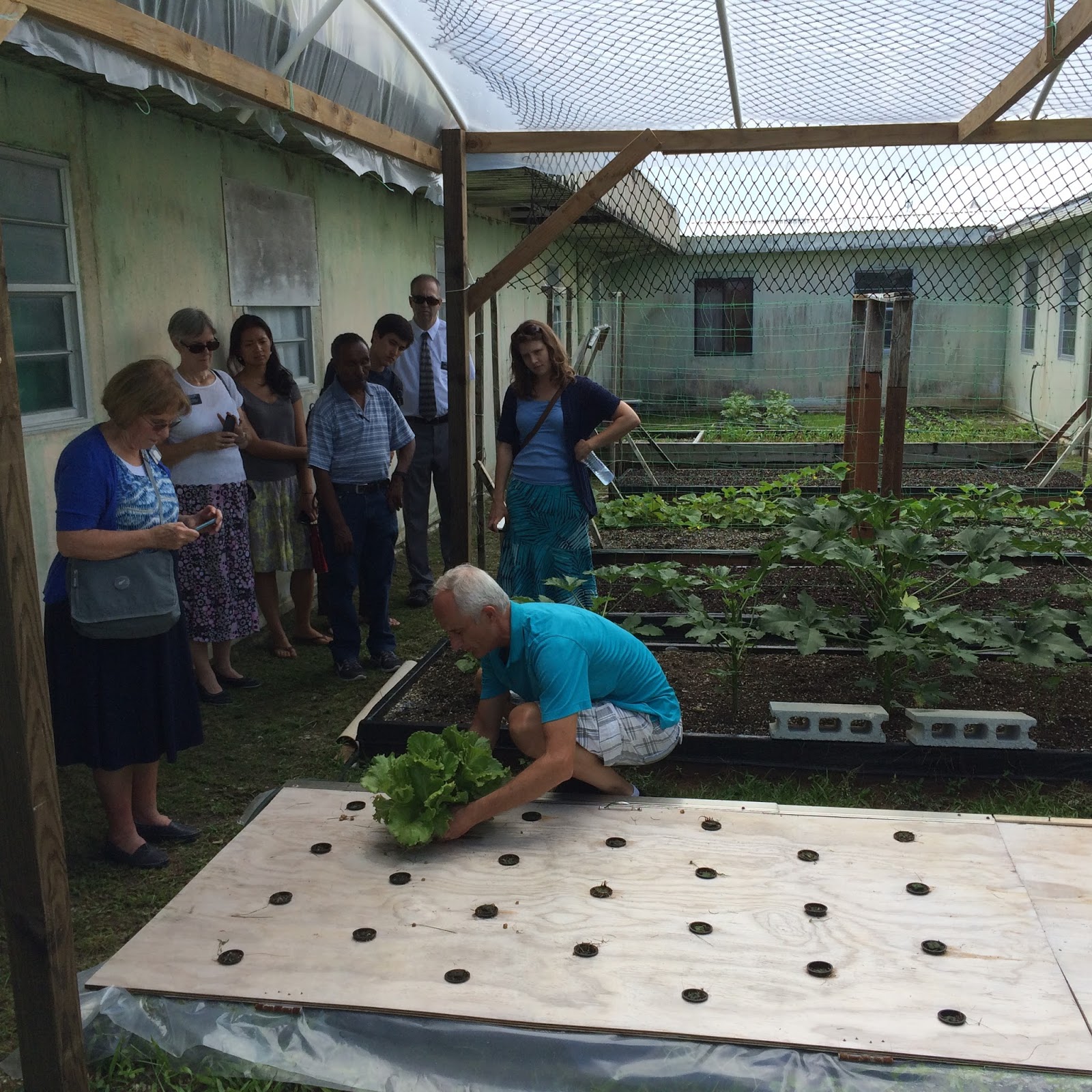
When we got to our next meeting they told us that it was for Friday so we headed back to the mission office to work on diabetes project development.  When it was time for our next meeting we went to the hospital where we met with the assistant Minister of Health and the acting Secretary of Health.  Again we reviewed the need for diabetes prevention on the island. At lunch time we went back to the Wellness Center which is run by an organization called Canvasback Mission, which is associated with the Seventh Day Adventists.  This is a wonderful center.  Four times a year they hold a seminar to teach people better lifestyle habits.  During the training sessions a person learns about diabetes and how to control it. People can come to the center and eat for $5.00 a day.  They also have an exercise room which is free to the public.  In addition to the specially prepared meals and exercise programs, people learn how to cook.  The wellness center has a garden which is located between different wings of the hospital.  They also have a very unique gardening and composting methods.


Ray and Tanner, Directors or Wellness Center
Liquid Fertilizer Ouside
And inside
Hydroponics
After our visit to the wellness center we put on some more casual clothes and drove the the other end of the island to visit the Taiwan Technical Mission.  They had an excellent gardening operation.

Andy, the man in charge


Taro

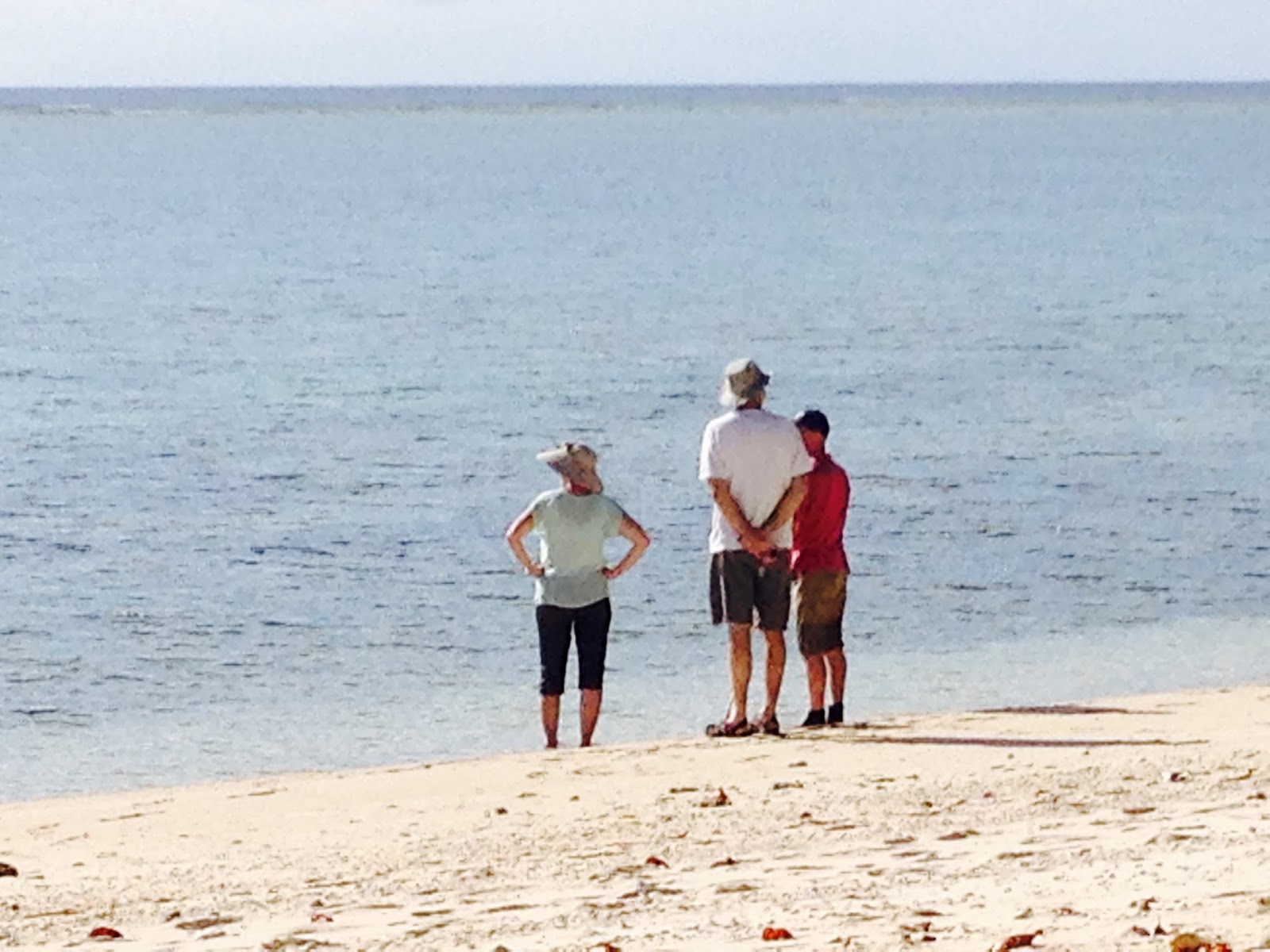
We then drove to the beach where we checked out the ocean.


Friday morning we visited with the Ministry of Education and talked with them regarding their needs including diabetes prevention teaching in the schools.


That meeting finished we went back to the hotel to check out and then went back to the mission office to continue working on developing our diabetes prevention project.

The Crooks fed us an early dinner as our flight was leaving at 8:00pm.  We arrived at the airport at the appointed 5:00pm, checked in and waited till we could go to the boarding gate.  We boarded the flight with all the medical personnel who had spent the week doing eye surgeries.  They said they performed over 100 surgeries. We really enjoyed working with E/S Crooks and are very positive about the shape this diabetes prevention project is taking.

"Great things are brought about and burdens are lightened through the efforts of many hands "anxiouly engaged in a good cause" (D&C 58:27)" M. Russell Ballard, October 2012 General Conference

Monday, May 25, 2015

Memorial Day

On Saturday, May 23, 2015, after the dance fest Elder and Sister Waldron took us for a ride to see some of the historical sites of the island.  We drove to a part of the island called Betio (Beso).  This is where the Battle of Tarawa took place.  The Battle of Tarawa on Red Beach was one of the bloodiest battles fought in the Pacific.  The battle was 76 hours long.  More than 4,700 Japanese and 1,056 Americans died in this battle.  Betio was considered a strategic gateway to the other Japanese held islands.  The U.S. wanted to take control of the airstrip which the Japanese were building.  We looked around and looked pictures.


Below is where ammo for the guns was stored.  Across the street is the Betio ward building.  Just next to this church building is where the headquarters for the Japanese high command was located.  Elder Waldron told us that a stray bomb hit this bunker killing all of the Japanese leaders.  The church owns the land on either side of the bunker, but not the land which the bunker itself sits upon, it is not for sale.
Ammo storage
High Command Bunker
We tried to post these pictures when we were in Kiribati on the Sunday before Memorial Day, but our Internet was not strong enough. However, we were able to post a picture on Instagram.  The following day we received a message from a former missionary couple who served on Tarawa.  They told us that the spot where we are standing in front of the gun implacement is where Elder L Tom Perry (who served in the US Marines during WWII) dedicated the island nation of Kiribati for missionary work in August of 1996.  

Until 1971 Memorial Day or Decoration Day was always celebrated on May 30th.  In 1968 Congress passed the Uniform Monday Holiday Act, which changed 4 holidays from the traditional date to a specific Monday in order to create 3 day weekends.  Decoration Day originally began as a way to honor those who died in the Civil War.  After World War II, the name was changed to Memorial Day in order to honor all who died in any war or military action.  After seeing Anzac Day in New Zealand, we think the United States could do a better job of remembering those who have died for our freedoms.  

Why do we know so much about Memorial Day?  Susan's birthday is May 30th.  Growing up it was always a holiday.  We were married before it changed to the last Monday in May.  There were many times growing up that she wished her birthday was not on a holiday - but no sense looking back.  We can not change yesterday, only today.


"We have selected this site for our prayer where death and destruction reigned a few decades ago, in contrast to our message of peace, hope and goodwill for all of thy children here on earth.  Elder L. Tom Perry Dedicatory Prayer of Kiribati August 1996